


An atmosphere of feeling of anticipation. Apparent is the cold breath exhaled by my competitors as they perform the "starting line" jiggle on the start line.
A rapid twitch of the hips.
I'm at my local weekly parkrun event and I'm focused. The countdown begins...
Hold on. I must adjust my device. The same goes for the guy beside me.
The person waiting tuts. I refuse to go until… there! Connection established, I'm off.
In the mele, it's challenging to see a person without a smartwatch on it. And it's not just us athletes who wear them.
This is a thriving, multi-billion dollar sector. Companies like Apple Watch are prevalent, featuring an broad array of various models to fit a variety of needs. Depending on how high tech the device you choose, price tags can start from a hundred pounds to thousands of pounds.
"It makes me crazy, it's impossible to relax."
"It comforts me… It acts as a supporter supporting me."
"Please don't notify me I've had a restless night."
Just some of the responses I've received from fellow smartwatch wearers when I question what they their opinion is on theirs.
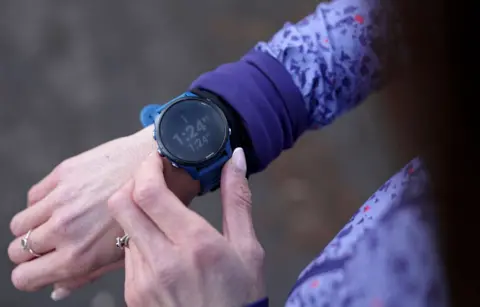
The Data Dilemma
My thoughts on my own device? Right now, irritating. It's telling me my speed is wrong, leading me to doubt whether the trees along my route are blocking my location tracking.
A vast number of us strap these little devices onto our wrists and wear them 24/7, ostensibly unconcerned with the fact they're continuously recording us.
A distant memory are the days when we relied on them only to give us an idea of our step count. Today, they can analyse our nightly rest, heart rate, heart rate variability (HRV), our recovery score.
It's a challenge to find a health indicator they fail to monitor.
But do they do what they advertise? And are the statistics we analyse a faithful picture of our actual health? Do they boost our daily wellness, or do the avalanche of measurements and cheerleading alerts just contribute to our everyday anxiety?

A Complicated Bond
"I find myself getting a quite preoccupied with mine," one user admits.
While she loves how her device monitors her exercise, she finds some of its other functions "daunting" at times - a feeling first discovered during a significant period.
Before she realised she could adjust the settings, her smartwatch repeatedly informed her she was not being energetic enough. In a new phase, the watch insists her she's had a poor sleep score.
"I am caring for a infant, there's no point to be informed my sleep was poor," she says. "I know that all too clearly."
Is it not possible to just stop wearing it?
"It's possible, I suppose, but I'm in this complicated dynamic with it," she continues. "I love it for its workout tracking, I just wonder whether the additional features it can now do is possibly excessive for me."
Inside the Device
Every device of smartwatch has its own unique way of tracking your bodily functions and analysing your data, but the majority use optical sensors on the underside of the watch.
They commonly project minute LED lights onto your wrist which can monitor pulsation, identifying your heartbeat. Sophisticated devices detect changes in the electrical current that runs through the skin to gauge your nervous system activity.
A Fine Balance
A professor says that for most people for smartwatches, it's a "difficult line" - while the continuously improving tech could realistically save lives, "detecting disease before we show symptoms", it could also turn us watch wearers into the "anxious healthy".
He points out that some of the latest wearables can carry out tests like electrocardiograms (ECGs), which continuously monitor how healthy the heart is. They can alert if someone is experiencing a heart arrhythmia, where there is erratic electrical activity in the heart causing an uneven pulse.
This does not automatically signal someone is on the verge of a heart attack, but it can give an early warning they might be more susceptible of a heart problem in the long term.
But how to make sense of these figures is complex. The expert worries that as more functions are incorporated, people may find it hard to fully comprehend their data.
"I remain sceptical that the ability to monitor so many things is such a positive development," he says.
A professor focusing on patient behaviour agrees. Research into the impact of wearable tech on a cohort of heart condition patients suggested a significant portion of those who were given devices to monitor their heart health experienced increased anxiety and were "had a higher tendency to use healthcare resources".
She noted a vicious circle with her patients - they noticed a worrying figure on their watch. They grew concerned. Their BPM went up. They got more worried. They re-examined the data, and their reading went up again.
"Upon viewing stats about ourselves that we lack context for then, understandably, we are going to become concerned," the psychologist says. "We look, we obsess - it becomes a self-fulfilling prophecy."


